When you’re buying or selling a home—or completing many other kinds of financial transactions—you’ll probably hear the word escrow a lot. For many people, it sounds like mysterious middleman magic. But an escrow company’s job is actually pretty straightforward once you see how all the pieces fit together.
Let’s break it all down.
What Is an Escrow Company?
An escrow company is a neutral third party that holds funds and documents on behalf of both sides in a transaction. Their whole purpose is to make sure everyone does what they agreed to do before the money changes hands.
Think of them like the referee in a sports match: they don’t pick sides, but they make sure the rules are followed.
Escrow companies are most common in real estate, but they’re also used in business purchases, online transactions, and mergers—any time trust and verification matter.
What Are the Duties of an Escrow Company?
Here’s what an escrow company is generally responsible for:
1. Acting as a Neutral Holder
- They keep the buyer’s deposit, the seller’s deed, and other key documents safe until all conditions are met.
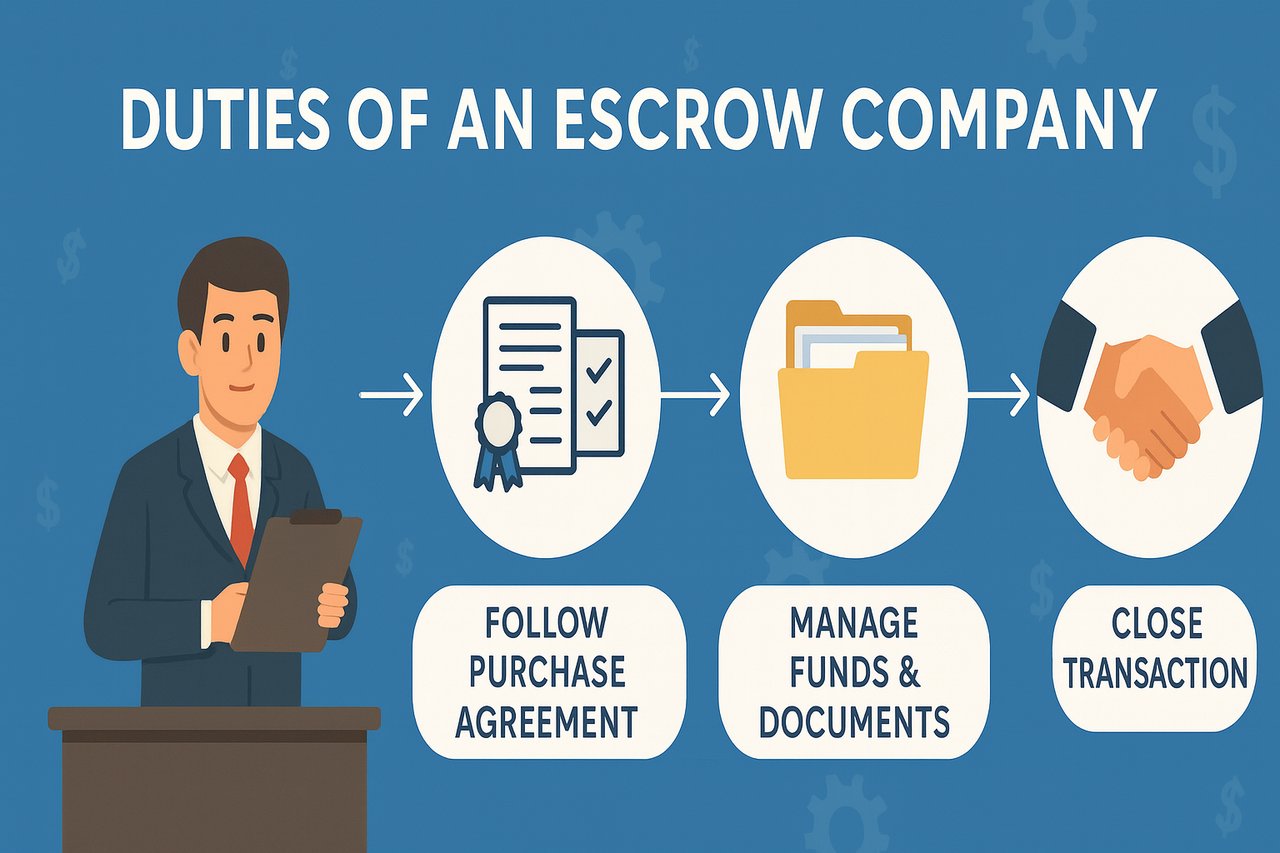
2. Following the Purchase Agreement
- Escrow doesn’t get to freelance—everything they do must align with the instructions provided by the buyer, seller, lender, and agents.
3. Managing Funds
- They receive, track, and disburse money securely:
• Earnest-money deposits
• Loan funds
• Seller proceeds
• Payoffs for old loans
• Property taxes and insurance
4. Document Management
- They handle:
• Title documents
• Loan documents
• Disclosures
• Closing instructions
• Final settlement statements
• They also verify that everything is signed correctly.
5. Coordinating With All Parties
- Escrow acts as the communication hub between:
• Buyer
• Seller
• Real estate agents
• Lender
• Title company
• Insurance providers
• County recorder
- Essentially, if someone needs something, escrow facilitates its movement.
6. Ensuring Conditions Are Met
- Before closing, the escrow officer confirms:
• Contingencies are removed
• Repairs are completed (if required)
• Loan approval is in place
• Title is clear
• Seller can legally transfer the property
7. Preparing Closing Statements
- Escrow creates the settlement statement (also known as the Closing Disclosure or HUD-1), showing every dollar going in and out.
8. Closing the Transaction
- Escrow:
• Oversees final signatures
• Disburses funds to the right parties
• Records the deed with the county
• Officially completes the transfer
9. Maintaining Accurate Records
- They keep a solid paper trail for legal and tax purposes.
What Is the Sequence of Tasks in an Escrow Transaction?
Here’s the typical step-by-step workflow an escrow company follows (especially for real estate):
1. Escrow Opens
- Escrow gets:
• The purchase agreement
• Deposit instructions
• Contact info for everyone involved
• The buyer submits their earnest-money deposit.
2. Escrow Reviews Instructions
- They verify what both sides must do and create a timeline.
3. Order Title Work
- Escrow works with the title company to confirm ownership and check for liens or issues.
4. Collect Information
- Escrow requests:
• Loan payoff statements from the seller
• HOA documents (if needed)
• Tax info
• Insurance info
• New loan details from the buyer’s lender
5. Monitor Contingencies
- They track deadlines for:
• Inspections
• Appraisal
• Loan approval
• Repairs
• Title review
• Escrow can’t remove contingencies, but they keep things organized.
6. Prepare Settlement Documents
- This includes:
• Estimated closing statements for both sides
• Final loan documents (once lender approves)
• Any required affidavits or disclosures
7. Signing Phase
- Buyers and sellers sign:
• Loan documents
• Transfer deeds
• Settlement statements
• Escrow instructions
8. Fund the Escrow
- Funds arrive from:
• Buyer
• Buyer’s lender
• Seller (if needed to clear liens)
• Escrow double-checks that everything matches.
9. Disbursement
- Once all conditions are met, escrow:
• Sends proceeds to the seller
• Pays off the seller’s old loan
• Pays agents
• Covers taxes, HOA fees, and other required items
10. Recording
- The new deed is recorded with the county, making the buyer the official owner.
11. Close and Finalize
- Escrow:
• Prepares final accounting
• Sends copies of documents to both parties
• Closes the file
That’s it—the transaction is done.
Final Thoughts
Escrow companies play a crucial role in ensuring that high-value transactions are safe, fair, and organized. They’re essentially the gatekeepers of trust—making sure every requirement is checked off before the keys or funds finally get handed over.
Feel free to contact me with questions. I am here to guide your every step.
Tina Lucarelli - Realtor - The ONE Luxury Properties, Inc.
(310) 738-8089