If you are searching for luxury equestrian property in Agoura Hills, the house is only part of the story. What matters just as much is how the land works for horses, how easily you can access nearby riding, and whether the property fits local rules and wildfire realities. With the right due diligence, you can buy a property that supports both your lifestyle and your long-term investment goals. Let’s dive in.
Why Agoura Hills appeals to equestrian buyers
Agoura Hills stands out because equestrian living is woven into the area’s outdoor identity. The city describes itself as the Gateway to the Santa Monica Mountains National Recreation Area, with hiking, biking, and equestrian trails that connect to larger state and federal parklands. For you as a buyer, that means the value of a horse property often extends well beyond the fence line.
That regional access is a real advantage. The National Park Service notes that the Santa Monica Mountains include more than 500 miles of public trails overall, and areas such as Cheeseboro and Palo Comado Canyon are popular with equestrians. If regular riding is part of your routine, proximity to these trail systems can be as important as the design of your barn or arena.
The Backbone Trail adds another layer of appeal. According to the National Park Service, equestrians can access all 67 miles of this trail. That helps explain why many buyers in Agoura Hills look closely at how a property connects to the broader riding network, not just how many acres it includes.
What luxury equestrian really means
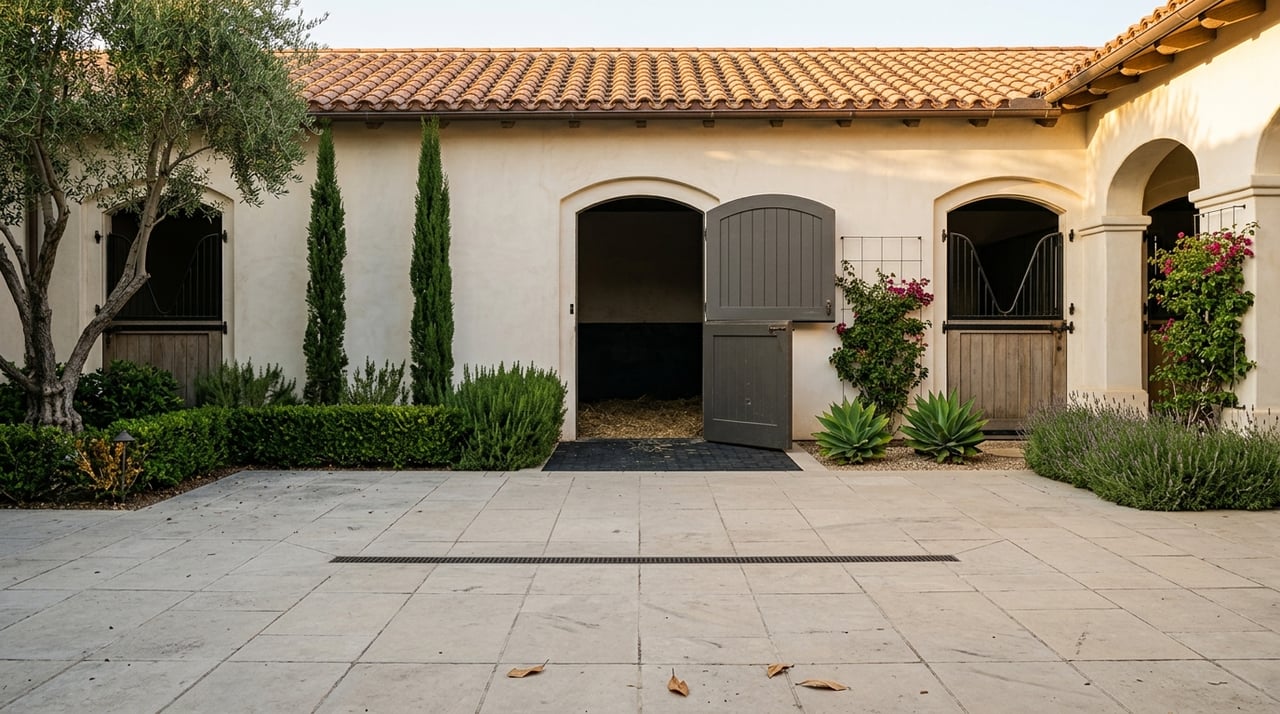
In Agoura Hills, a luxury equestrian property should do more than look impressive. It should function smoothly for horses and riders every day. That means shelter from weather, fresh air, dry bedding space, and well-planned areas for feed, tack, grooming, and routine care.
A well-designed barn is one of the clearest signs of quality. Extension guidance points to ventilation as a major factor, since poor airflow is one of the most common horse-facility design mistakes. Preferred stall sizes are generally 12-by-12 or larger, with 10-by-10 considered more of a minimum for many light horses.
Hay storage also matters. Guidance on horse-facility design recommends keeping hay and bedding separate from stalls rather than storing them above horses. For you, this is not just a design preference. It is part of evaluating safety, fire risk, and how thoughtfully the property was planned.
Barn features worth checking
When you tour a property, look beyond finishes and focus on how the barn performs.
- Ventilation and fresh-air openings
- Stall size and stall layout
- Grooming or wash areas
- Tack, feed, and bedding storage
- Separation of hay storage from stalls
- Safe access for horses, people, and equipment
Arenas, drainage, and footing matter more than photos
A beautiful riding arena can be one of the biggest value drivers on an equestrian property, but only if it is built well. Arena footing needs to be selected and maintained carefully. Guidance on arena design warns that overly deep sand can stress tendons, while uneven footing can become both unsafe and expensive to fix.
Drainage is another key issue. Outdoor arenas need proper water management, and that often reflects how well the entire property has been engineered. If an arena, paddock, or turnout area shows signs of poor drainage, you may also want to look more closely at grading, runoff patterns, and seasonal usability across the parcel.
Fencing and turnout deserve the same level of attention. Horse fencing is a major capital investment, and it should be planned around gates, traffic flow, and equipment access. Separate paddocks or turnout areas can also make daily horse management much easier, especially on properties where space is limited.
Trail access should be practical
In equestrian real estate, trail access sounds simple until you test the logistics. A property may be close to major riding areas but still feel inconvenient if trailer maneuvering is tight, roads are awkward, or parking at the trailhead is difficult.
The National Park Service notes that horse trailers may park at the main lot for Cheeseboro and Palo Comado or at Old Agoura Park, but parking can be difficult on weekends because of heavy visitation. That is why it helps to think in real-world terms. Can you get in and out easily with a trailer? Will weekend congestion change when and how you ride?
Questions to ask about riding access
- How far is the property from your most likely trailhead?
- Is the route comfortable for towing a trailer?
- Is there enough on-site room for trailer storage and maneuvering?
- Are nearby public trailer parking areas practical on busy days?
- Can you ride directly from the property, or will you need to haul out?
Local rules can shape what is possible
Before you fall in love with a property, confirm what the parcel actually allows. In Agoura Hills, municipal code language in at least one district limits the raising, maintaining, keeping, or grazing of horses and other equines and cattle to eight adult animals per acre. That same provision also prohibits those animals from being raised or grazed as part of a dairy, livestock feed yard, livestock sales yard, or commercial riding academy on the same premises.
The important point is that this is not something you should assume applies the same way to every property. The research indicates that this language appears in a district standard, not a blanket citywide rule. For you, that means parcel-specific zoning and specific-plan review are essential before you rely on a horse count, boarding plan, or future improvement idea.
The city’s public amenities reinforce that equestrian use is part of local life. Agoura Hills says its equestrian arena is available on a first-come, first-served basis and may also be reserved by nonprofit or private groups for up to two hours per day. The city also states that the Ladyface Greenway project is intended to improve pedestrian, bike, and equestrian connectivity.
Site constraints buyers should not overlook
Some of the most important limitations on an equestrian property are not obvious during a first showing. In Agoura Hills, oak-tree protection can directly affect where you place or expand horse facilities. The city says protected native oaks require special care, and construction near an oak may require a permit, with a protected zone extending under the canopy plus five feet.
That can influence plans for barns, paddocks, arenas, and driveways. A parcel may look spacious, but mature trees can reduce the amount of truly usable area for equestrian improvements. This is one reason a site plan review is so important when you are comparing properties.
Wildfire risk also belongs at the front of your due diligence list. Agoura Hills states that it is in a CAL FIRE designated Very High Fire Hazard Severity Zone, and the city’s preparedness information highlights the role of dry vegetation and Santa Ana winds. For horse owners, that makes defensible space, evacuation readiness, and insurance questions part of the initial property review, not something to sort out later.
Match the property to your lifestyle
Not every equestrian buyer wants the same level of daily involvement. Some owners want a highly hands-on setup. Others want a property that supports horses while keeping maintenance and management more streamlined.
Research on self-care horse facilities shows that owners may be responsible for feeding, cleaning, veterinary coordination, shoeing, and exercise, with stalls cleaned daily. Guidance on pasture management also notes that limited acreage often means more stall time, more hay, and more active turnout planning. In practical terms, that means you should match the property to the amount of work and oversight you actually want.
Think through your day-to-day routine
Before you buy, ask yourself:
- Do you want to manage horses on-site personally?
- How much land is truly usable for turnout?
- Will limited acreage increase feed and stall needs?
- Is the layout efficient for daily chores?
- Do you have a realistic plan for manure management?
A smart buyer checklist for Agoura Hills
Luxury equestrian purchases reward careful review. The right property should support your horses, your riding habits, and the practical realities of the site.
Use this checklist as a starting point:
- Confirm parcel-specific zoning and specific-plan rules
- Verify horse-count limits and any boarding restrictions
- Check usable space for a barn, arena, turnout, and trailer maneuvering
- Review barn ventilation, stall size, and storage layout
- Evaluate arena footing and drainage
- Inspect fencing, gates, and traffic flow
- Ask about manure handling and maintenance routines
- Test trail and trailer logistics in real conditions
- Review wildfire preparedness and evacuation planning
- Confirm whether oak-tree protections may limit improvements
In a market like Agoura Hills, luxury means more than scale. It means a property is thoughtfully designed, legally workable, and aligned with how you actually plan to live and ride. When those elements come together, you can buy with more confidence and enjoy the lifestyle the property is meant to deliver.
If you are considering an equestrian home in Agoura Hills and want discreet, local guidance on property fit, site constraints, and lifestyle value, Tina Lucarelli offers a concierge-level approach tailored to distinctive properties across the Conejo Valley.
FAQs
What makes Agoura Hills appealing for equestrian buyers?
- Agoura Hills offers access to local equestrian amenities and a larger regional trail network connected to the Santa Monica Mountains, including popular riding areas such as Cheeseboro and Palo Comado Canyon.
What should you look for in a luxury equestrian property in Agoura Hills?
- Focus on function as much as appearance, including barn ventilation, stall size, separate hay storage, safe fencing, turnout space, arena footing, drainage, and practical trailer access.
How important is trail access when buying a horse property in Agoura Hills?
- Trail access is very important, but it should be evaluated in practical terms such as towing routes, trailer parking, weekend congestion, and whether you can ride out directly or need to haul.
Are there horse-property rules you should verify in Agoura Hills?
- Yes. Buyers should confirm parcel-specific zoning, specific-plan standards, horse-count limits, and any restrictions that could affect boarding or future equestrian use.
Why is wildfire planning important for Agoura Hills equestrian homes?
- Agoura Hills is in a Very High Fire Hazard Severity Zone, so horse-property buyers should review defensible space, evacuation planning, and insurance considerations early in the process.
Can oak trees affect future equestrian improvements in Agoura Hills?
- Yes. The city says protected native oaks may require special care and permits for nearby construction, which can limit where you place barns, arenas, paddocks, or driveways.