Dreaming of a horse-friendly home where trailheads are minutes away and evenings end in the barn? If you are considering Agoura Hills, you are in good company. The area blends a strong equestrian culture with access to the Santa Monica Mountains, but the details matter. In this guide, you will learn how zoning works, what to check on a property, and how to enjoy the local trail network with confidence. Let’s dive in.
Zoning basics in Agoura Hills
Zoning determines if a property can legally keep horses and what structures you can build. In Agoura Hills, the municipal code and city departments set the rules for permitted uses, setbacks, and building standards. The number of animals, stable type, and whether a commercial equine use is allowed depend on your exact zoning district and any overlay zones. When in doubt, ask the City Planning Division for written confirmation before you write an offer.
How to confirm your parcel’s status
- Look up the property’s zoning designation with the City Planning Division.
- Ask whether domestic livestock is permitted and if there are limits tied to lot size.
- Confirm whether a stable, arena, or turnout is an accessory use that needs a building permit, or if it requires a Conditional Use Permit.
- Check for hillside, open-space, or other overlays that add restrictions on animal areas and structure placement.
Lot size, density, and livability
There is no one-size-fits-all rule for horses per acre, and legal minimums can differ by district. As a practical guideline, plan for about 1 acre per horse for comfortable turnout and easier land management. Coastal Southern California pasture carries fewer animals compared to wetter regions, so overstocking can quickly degrade soil and create nuisance issues. If your dream property sits on a smaller lot, consider limited on-site keeping with off-site turnout or boarding.
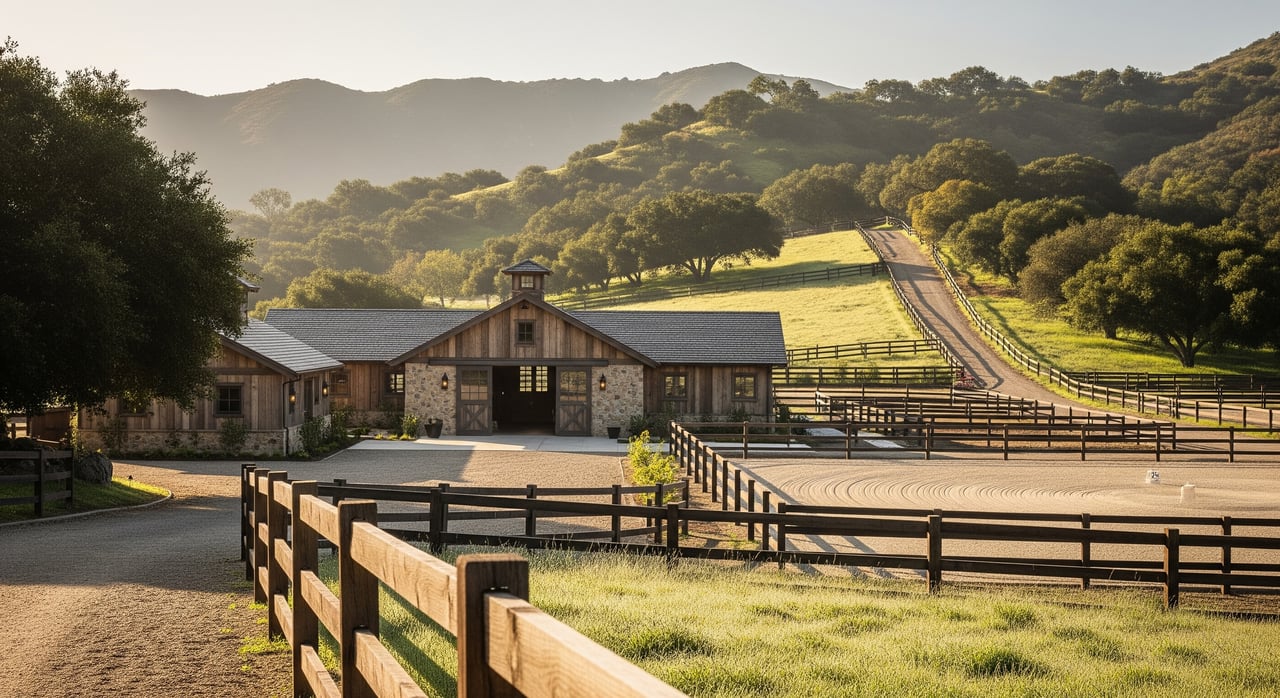
Barns, arenas, and permits
Most equine structures will require permits. Barns, loafing sheds, arenas, and wash racks often trigger building, plumbing, and sometimes electrical permits. Setbacks apply to structures, pens, and manure storage, and there may be minimum separations from property lines and waterways. If you plan any commercial activity, expect additional review, traffic considerations, and possibly a Conditional Use Permit.
Water, septic, and power
Many Agoura Hills properties receive water from the Las Virgenes Municipal Water District. Some rural parcels may use wells. Horses increase water demand, so verify meter size and current water-use rules, especially during drought. Wash racks and concentrated animal areas can add load to a septic system; check system capacity, records of upgrades, and whether new percolation testing is needed. For daily operations, confirm electrical capacity for fencing, lighting, and any heated troughs.
Manure and environmental care
A clear manure management plan is essential. Outline where you will store manure, how often it will be removed, and whether you will compost or haul away. If your land drains to creeks or sits near riparian areas, expect stricter stormwater and setback rules. Keeping piles covered and away from drainages protects water quality and reduces flies and odors.
HOAs and conservation easements
Some Agoura Hills neighborhoods have HOA rules that are more restrictive than city code. These can limit the number of animals, fencing types, riding rings, or even trailer parking. Conservation easements may also limit development and use. Review title and HOA documents early to avoid surprises.
Fire safety and evacuation planning
The Santa Monica Mountains region faces high wildfire risk. Plan for defensible space around all structures, including barns and hay storage. Confirm emergency vehicle access, available hydrants or water storage, and your evacuation routes. A written plan that covers trailer staging, animal identification, and communication can save valuable time during a red-flag event.
Trails and riding access near Agoura Hills
Access to public lands is a major benefit of the Agoura Hills lifestyle. You can reach a wide network of trails managed by several agencies:
- Santa Monica Mountains National Recreation Area: Equestrians are allowed on many trails, including areas around Paramount Ranch. Always review current site rules and any seasonal restrictions.
- MRCA and Santa Monica Mountains Conservancy: Popular equestrian areas include Cheeseboro and Palo Comado Canyon Park, along with other local preserves.
- California State Parks: Malibu Creek State Park permits horses on designated routes.
- Local and regional preserves: Upper Las Virgenes Open Space Preserve and nearby systems offer connected loop options and longer ridge rides.
Rules can change across jurisdictions, so confirm trail access and parking at your chosen trailhead. Trailer parking may be limited in some lots, and day-use policies can vary. Multi-use etiquette keeps everyone safe: ride in control, communicate when passing, and watch for dogs and bikes.
Typical ride options from town
From Agoura Hills, you can enjoy short canyon loops, longer ridge routes, and connector trails that sweep through the Santa Monica Mountains. Many riders stage near Cheeseboro Canyon, Paramount Ranch, and nearby regional trailheads. As you map rides, check posted signage for horse access and any event closures.
Boarding and local services
Not every buyer wants full-time horses on-site. Boarding can bridge the gap while you search for the right property or plan upgrades.
- Pasture board: turnout-focused care at lower cost.
- Stall board: stall plus daily care, feeding, and cleaning.
- Partial or self-care: you supply feed and daily management; the facility provides housing and basic amenities.
- Training or lesson board: adds instruction or training sessions and tends to cost more.
Availability in western Los Angeles County fluctuates, and some barns manage waitlists. Expect costs to vary based on stall vs. pasture, feed, turnout frequency, and added services like blanketing or medication. Contact facilities directly for current rates and amenities.
How to evaluate a boarding facility
- Visit more than once to observe turnout, stall care, and staff interaction.
- Review emergency procedures and veterinarian and farrier schedules.
- Ask about manure management and fly control.
- Read contracts for liability, termination terms, and responsibility for medical costs.
Environmental and neighborhood compatibility
Keeping good neighbor relations is part of a smooth equestrian lifestyle. Manage odor and flies with regular manure removal or composting, and plan turnout schedules that limit noise at sensitive times. Use lighting that minimizes spillover. If your fence line sits near a trail or drainage, consult the city about setbacks and best practices.
Buyer due diligence checklist
Use this list to structure your property research and escrow timeline:
- Confirm zoning with the City Planning Division and get written confirmation of allowed equestrian uses and any animal limits.
- Review title for deed restrictions, HOA covenants, or conservation easements that may limit livestock or structures.
- Verify water service source, meter capacity, and any water-use restrictions; confirm septic capacity if adding wash racks or plumbing.
- Determine permit requirements for barns, arenas, pens, or accessory structures, including any need for engineered plans or a Conditional Use Permit.
- Request a site plan that shows setbacks, drainage, and proposed locations for stalls, manure storage, and fencing.
- Confirm availability of local equine services, including ambulatory veterinarians, farriers, and feed suppliers.
- Review wildfire mitigation steps, including defensible-space compliance and emergency access.
- Identify nearby trailheads, trailer parking rules, and typical staging options for your riding plans.
- Obtain seller disclosures about prior animal use, permits, and any known violations or drainage issues.
- If planning a commercial activity, consult the city on business licensing, parking and traffic limits, and the Conditional Use Permit process.
Make a confident move with local guidance
Choosing the right equestrian property is part lifestyle and part logistics. With the right plan, you can enjoy spectacular riding while protecting your investment and your horses’ well-being. If you want a curated search, due diligence support, and introductions to trusted local vendors, connect with Tina Lucarelli for concierge guidance tailored to Agoura Hills and the surrounding luxury markets.
FAQs
How many horses can I keep on a property in Agoura Hills?
- It depends on your zoning district, lot size, and any overlays or HOA rules; as a practical guideline, plan for about 1 acre per horse and confirm specific limits with the City Planning Division.
Do I need a permit to build a barn or arena in Agoura Hills?
- Most equine structures require building permits, and additions with plumbing or electrical can need separate approvals; commercial uses may require a Conditional Use Permit, so verify with Building and Safety.
Where can I find horse-friendly trails near Agoura Hills?
- The Santa Monica Mountains National Recreation Area, MRCA-managed parks like Cheeseboro and Palo Comado, Malibu Creek State Park, and local preserves offer designated equestrian trails; check each agency’s current maps and parking rules before you go.
What should I know about wildfire risk for equestrian properties in the Santa Monica Mountains?
- Expect strict defensible-space requirements, plan for emergency access and evacuation routes, and consider water storage and ember-resistant materials for barns and hay storage; consult local fire authorities for current standards.
Can I run a boarding or training business from my Agoura Hills property?
- Some parcels may allow commercial equine uses with additional review; you may need a Conditional Use Permit and must address traffic, parking, and hours, so confirm details with the city early in your planning.
What are the water and septic considerations for a horse property in Agoura Hills?
- Many properties use Las Virgenes Municipal Water District service and on-site septic; confirm meter capacity, drought rules, and septic system capability if you plan wash racks or increased animal-related water use.